
Tank Water Heater Replacement
Removing the existing unit and installing a properly sized replacement tank heater.
Hot water
Tank and tankless water heater installation, replacement and service — including the hard-water protection that helps a new heater stay in good shape in Central Florida.
How it works
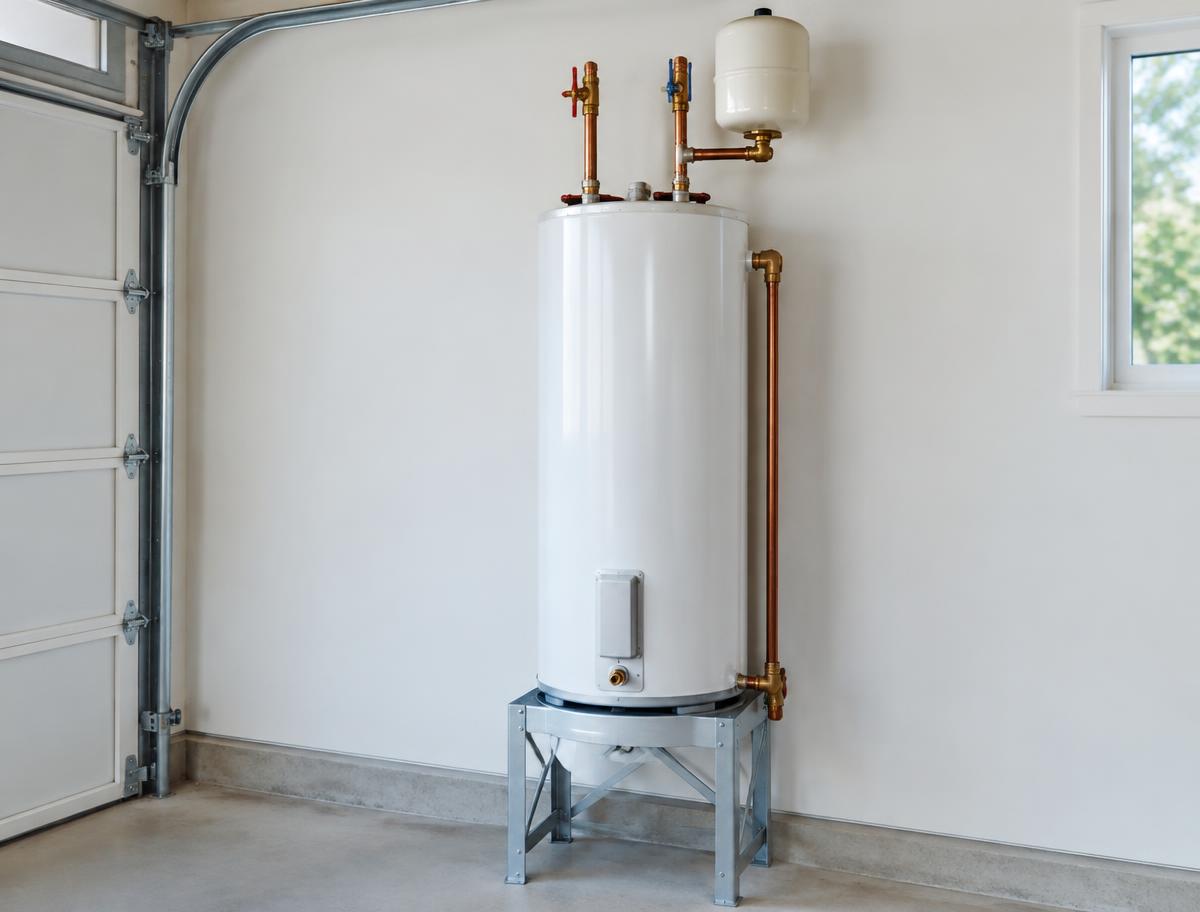
A tank water heater stores heated water and keeps it ready. It is a familiar, straightforward setup and usually the simplest replacement when you already have one.
A tankless unit heats water on demand as it flows through the unit. It takes up far less space and does not run out the way a tank can, but it requires the right gas, electrical or venting capacity, so the property has to support it.
Hard water matters for both. Scale is one of the most common reasons heaters lose efficiency or fail early, which is why we look at your water when we look at your heater.
At a glance
Common signs
If any of these sound familiar, it is worth taking a closer look at your water.
Your options
What makes sense depends on your current setup, available space, fuel type and how much hot water the property uses.
Removing the existing unit and installing a properly sized replacement tank heater.
On-demand units installed where the property's gas, electrical and venting capacity supports it.
Reviewing what the conversion requires before deciding, including plumbing and venting changes.
Diagnosing leaks, temperature problems, element and thermostat issues and tankless error codes.
Tank flushing and tankless descaling to reduce the effects of scale buildup over time.
Pairing the heater with softening or filtration so scale is treated before it reaches the unit.
Water heater types
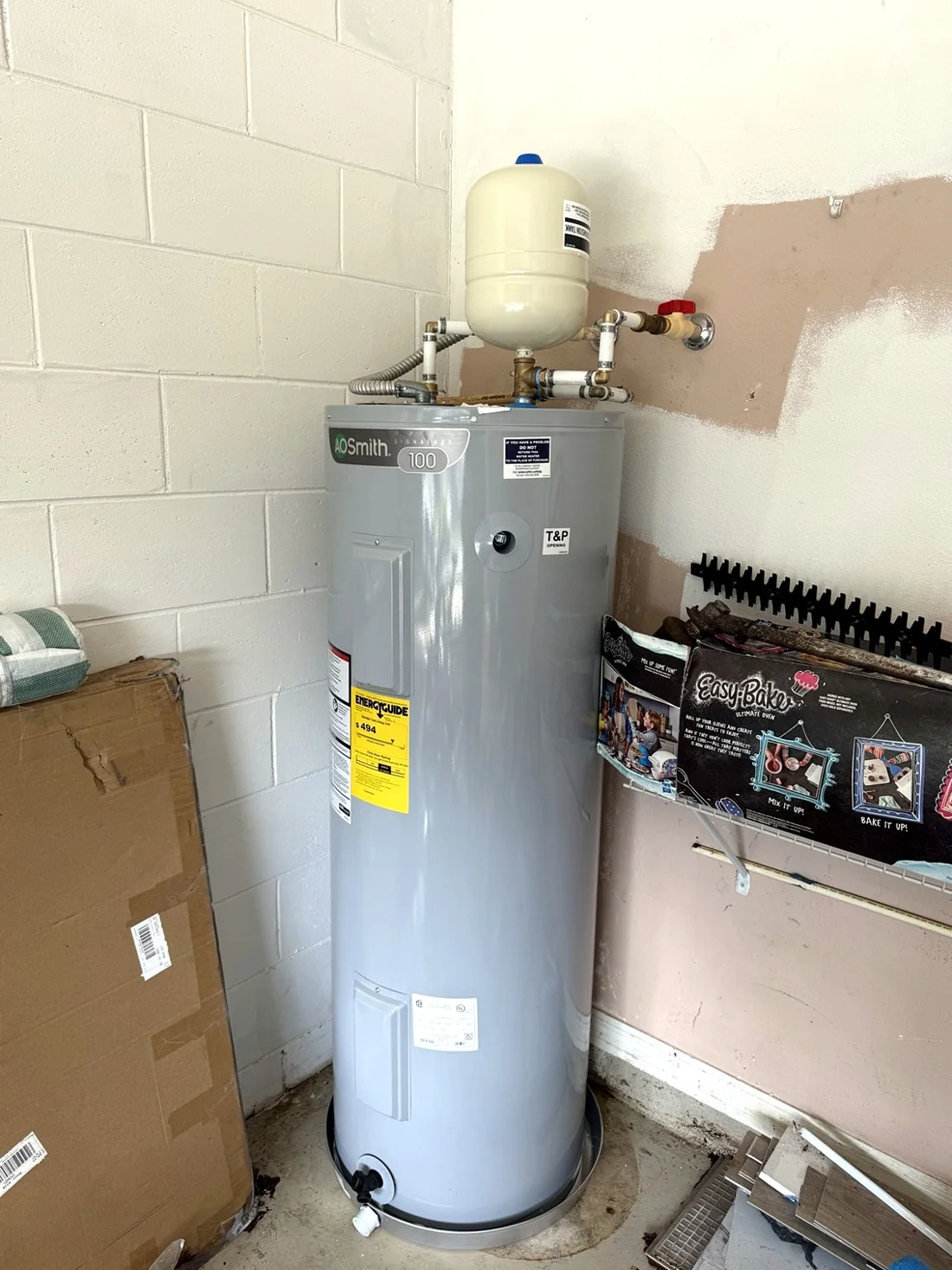
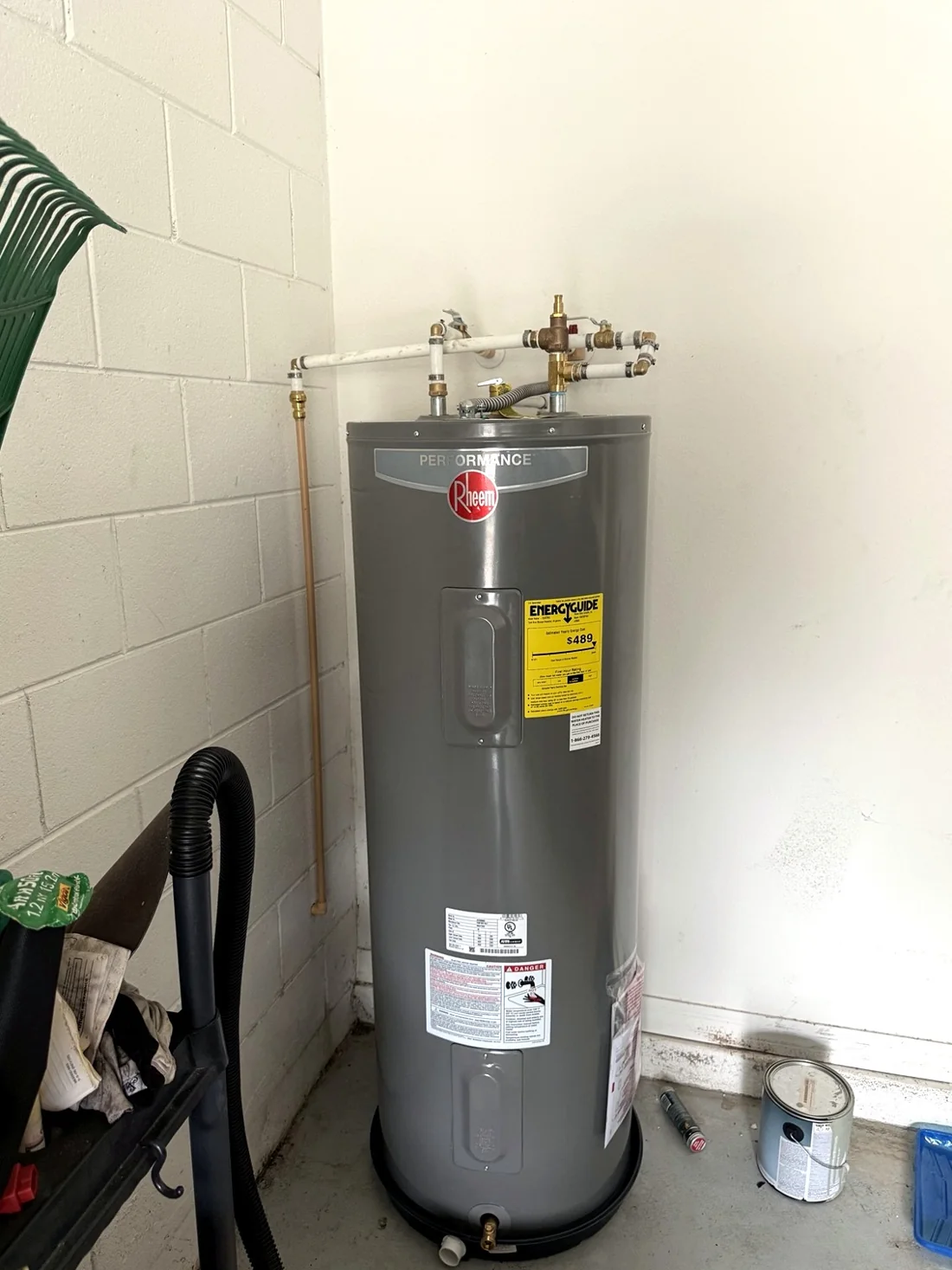
Standard tank units (shown above) are the most common replacement. Capacity, fuel or electrical supply, venting and available space also open up these options.
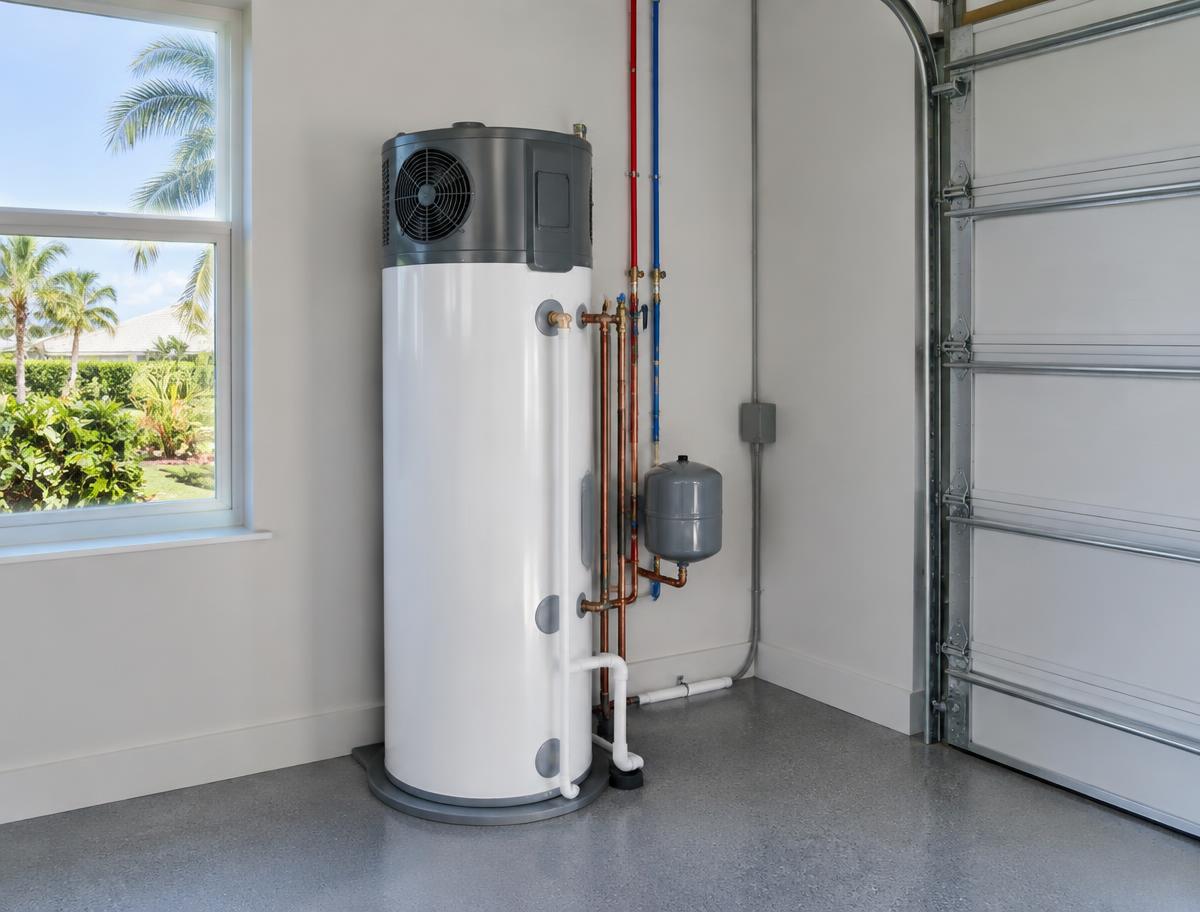
Uses a heat pump and needs suitable space, airflow, electrical service and condensate drainage.
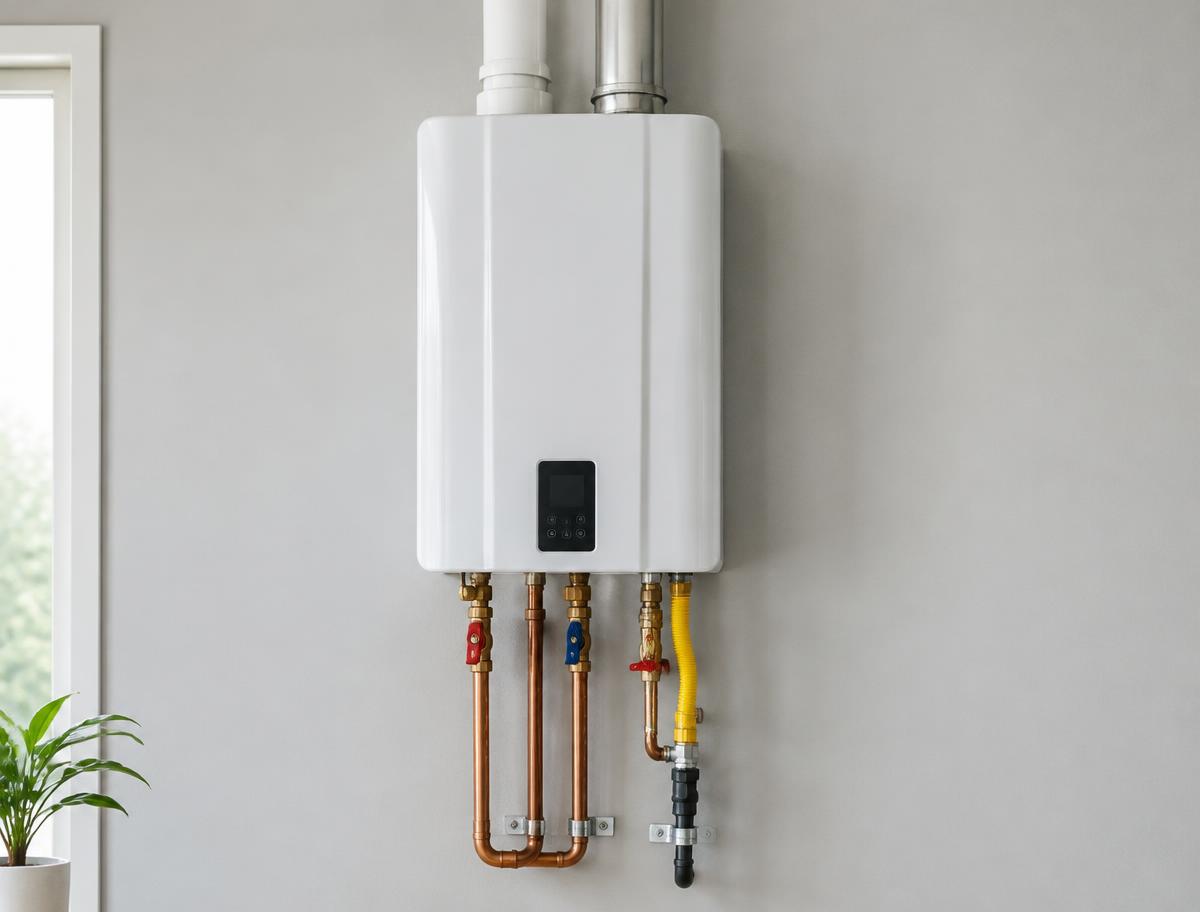
On-demand equipment matched to hot-water demand, fuel or electrical supply and venting.
From the field
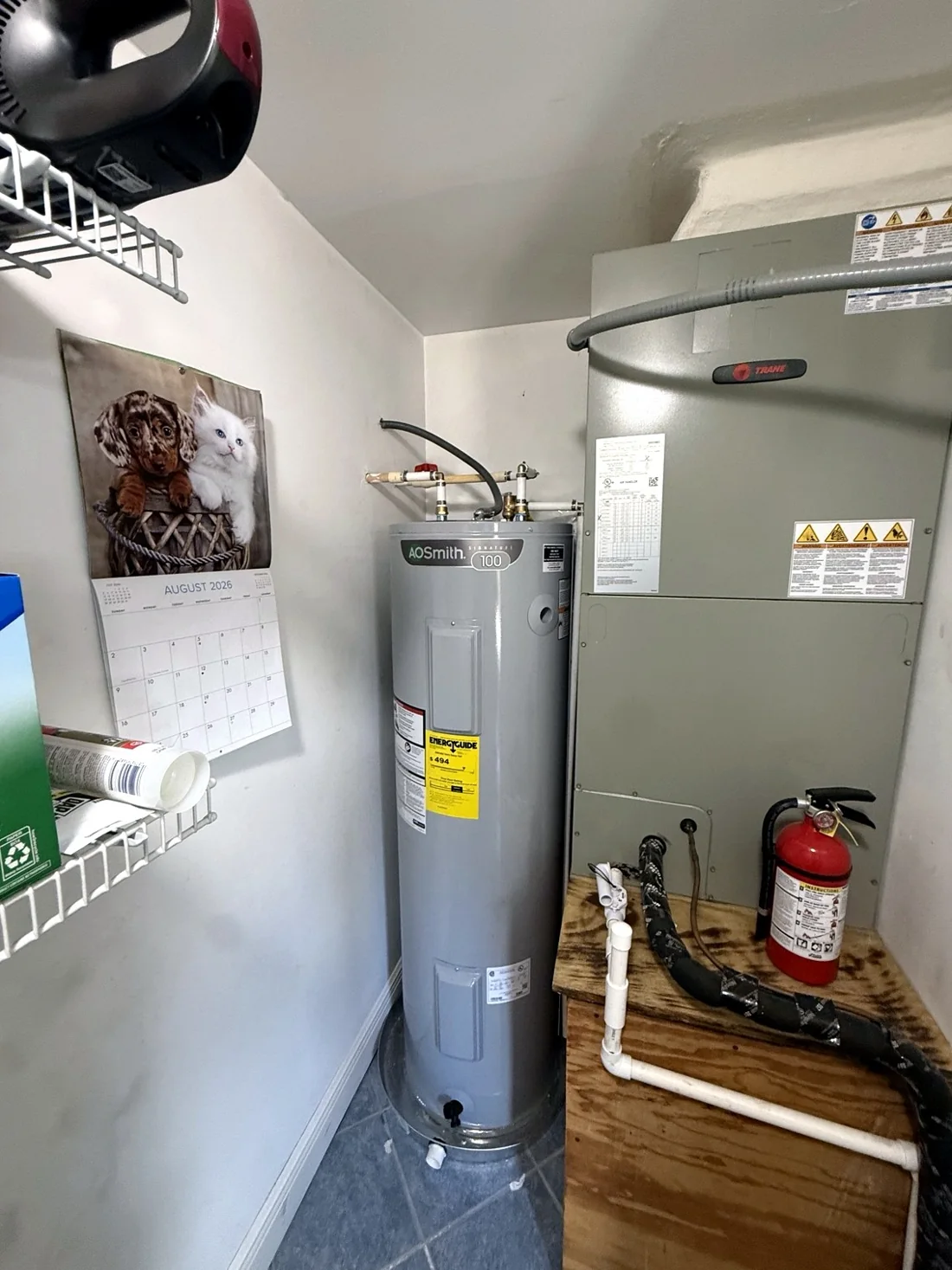
A. O. Smith and Rheem water heaters photographed in actual garage and utility-room settings.
Installation & service
Work is planned around your property, plumbing layout and the equipment you choose.
Next step
A new heater lasts longer when the water feeding it is treated. Request a free water consultation and we will look at both the heater and the water going into it.
View Service AreasTell us about your water source and what you are noticing. We will explain the options that fit your property.