
Standard Softening Systems
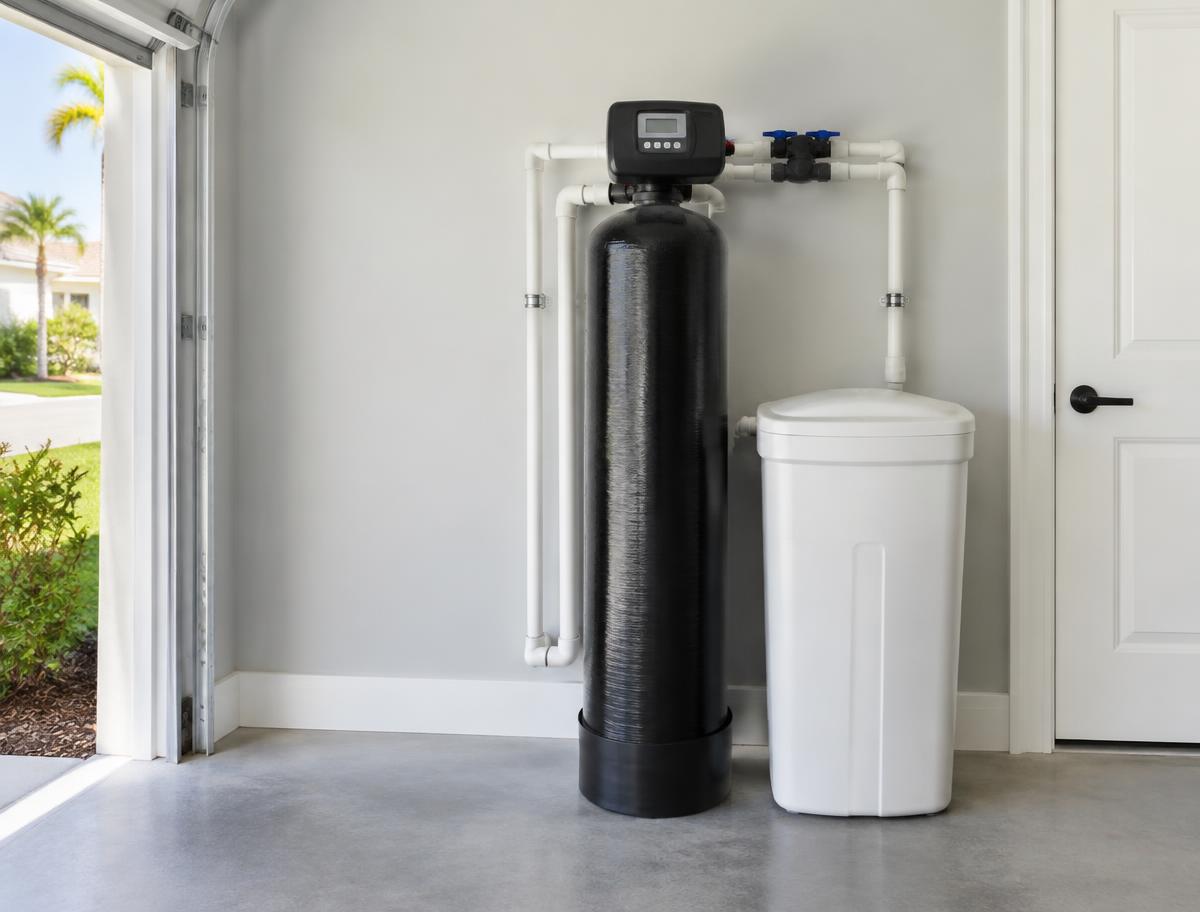
A resin tank and brine tank sized for typical household water use and hardness levels.
Hard water solutions
Central Florida water is often hard. A water softener reduces the hardness minerals that cause scale, spotting and buildup throughout your plumbing, fixtures and appliances.
How it works
Hard water carries dissolved calcium and magnesium. As that water moves through your plumbing and heats up, those minerals can leave scale behind on pipes, fixtures, glassware and inside water-using appliances.
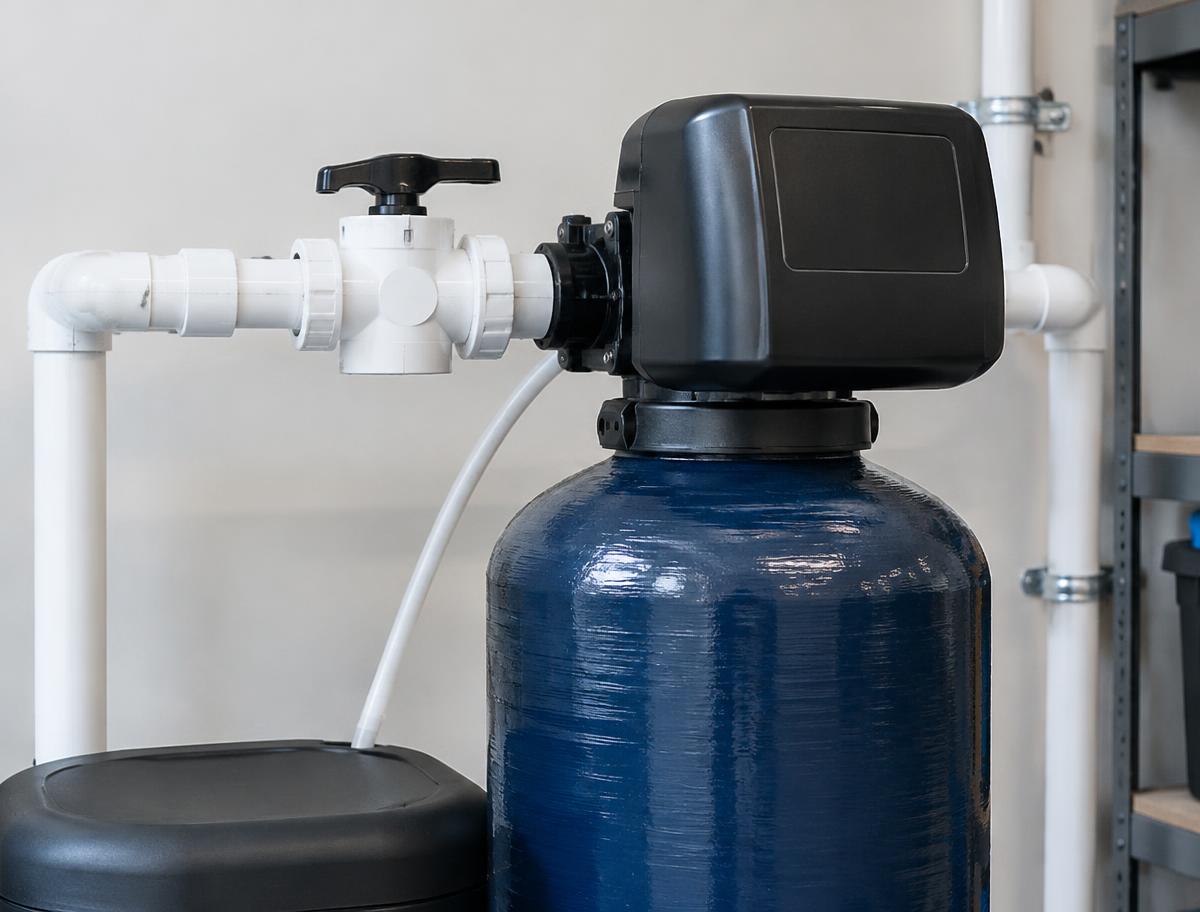
A softener passes your water through a resin tank that exchanges the hardness minerals for sodium or potassium. The system periodically regenerates itself using brine from a second tank, then returns to normal service automatically.
Softeners are sized around the hardness of your water, the number of people in the home and how much water you use, so the right unit for one property is not automatically the right unit for another.
Common signs
If any of these sound familiar, it is worth taking a closer look at your water.
Your options
The right configuration depends on your water source, hardness level, household size and available space.
A resin tank and brine tank sized for typical household water use and hardness levels.
Larger capacities for bigger households, heavy water use or higher hardness readings.
Pairing a softener with carbon or sediment filtration when taste, odor or particles are also a concern.
Softening set up alongside iron or sulfur treatment when the property is supplied by a private well.
Control settings and sizing chosen to regenerate based on actual water use.
Replacing an aging or failed softener and correcting the plumbing connections where needed.
Combination systems
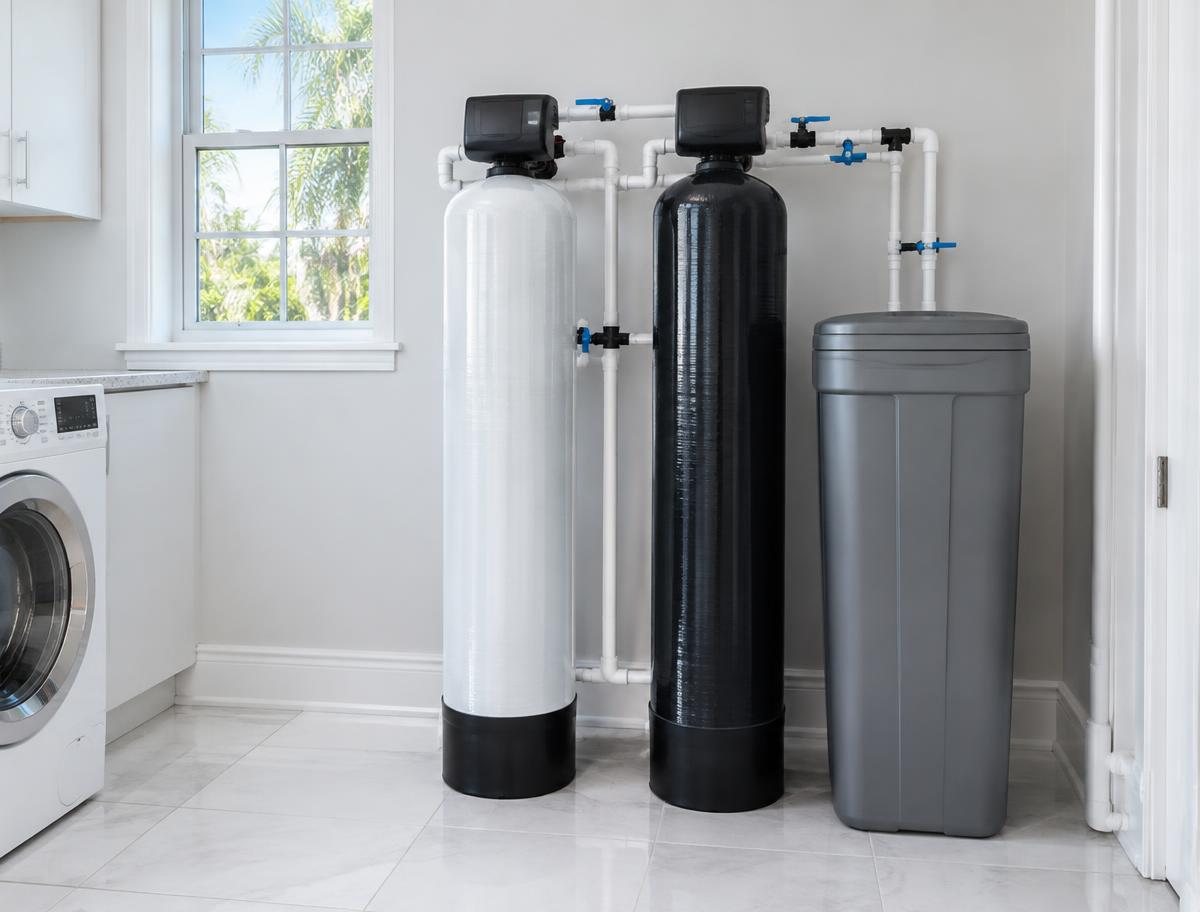
When taste, odor or chlorine are also a concern, a softener can be paired with a carbon filtration stage.
Installation & service
Work is planned around your property, plumbing layout and the equipment you choose.
Next step
Start with a free water consultation. We will look at your water, explain what we find in plain language, and show you which softening options make sense before you decide anything.
View Service AreasTell us about your water source and what you are noticing. We will explain the options that fit your property.