
Iron Filtration
Treatment aimed at the iron responsible for orange and brown staining and metallic taste.
Private wells
Well water can present challenges that city water does not, including iron staining, sulfur odor, sediment and hardness. Treatment is built around what your specific well is producing.
How it works
There is no single well water system. Two properties on the same road can need different equipment, because treatment depends on what is in the water and how the well and pump are set up.
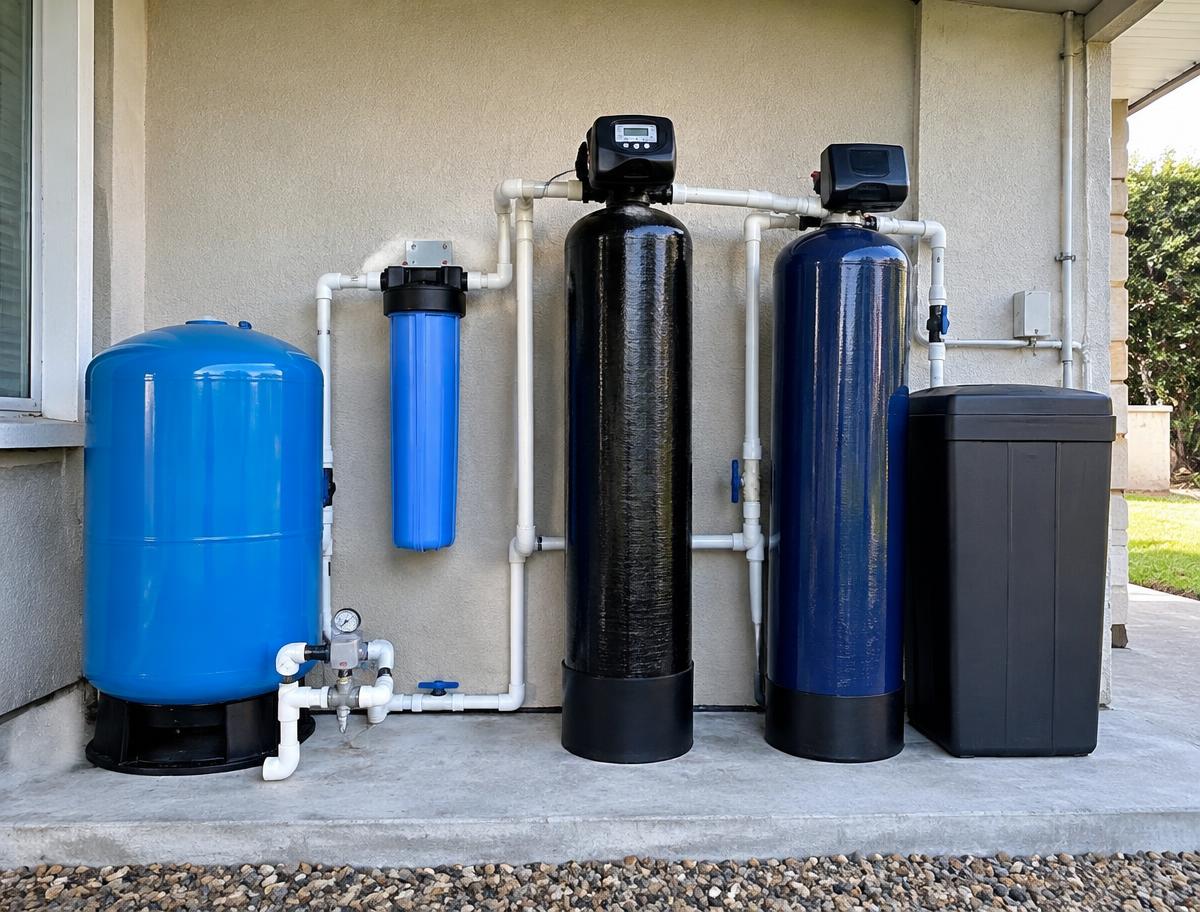
A typical approach uses stages. Sediment is removed first, then iron and sulfur are addressed through oxidation and filtration, or through chlorination and chemical injection with a retention tank. Hardness is handled by a softener after those stages, and drinking water can be polished further with reverse osmosis.
Because well water can change over time, systems are set up so they can be monitored, serviced and adjusted rather than installed and forgotten.
At a glance
Common signs
If any of these sound familiar, it is worth taking a closer look at your water.
Your options
Your configuration is chosen around the well itself, the concerns you are experiencing and how the property uses water.
Treatment aimed at the iron responsible for orange and brown staining and metallic taste.
Systems that address the rotten egg odor associated with hydrogen sulfide in well water.
Injection systems with retention for wells where oxidation and disinfection are the appropriate approach.
Pre-filtration that removes sand, silt and grit before it reaches downstream equipment.
Hardness treatment installed after iron and sulfur stages so the softener is protected.
Ultraviolet treatment as part of a multi-stage well system where appropriate.
Treatment stages
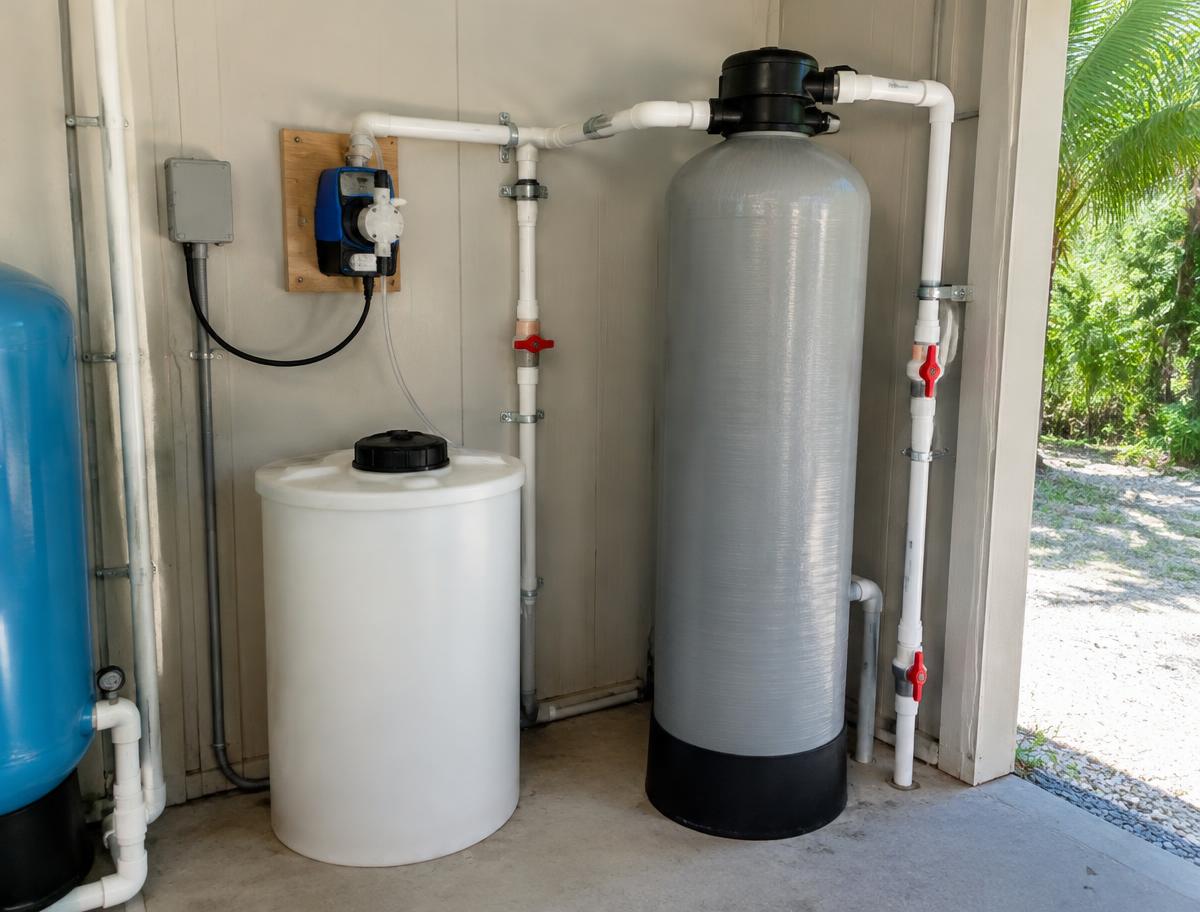
A metering pump and contact tank give chlorine time to work on bacteria, iron and sulfur before filtration.
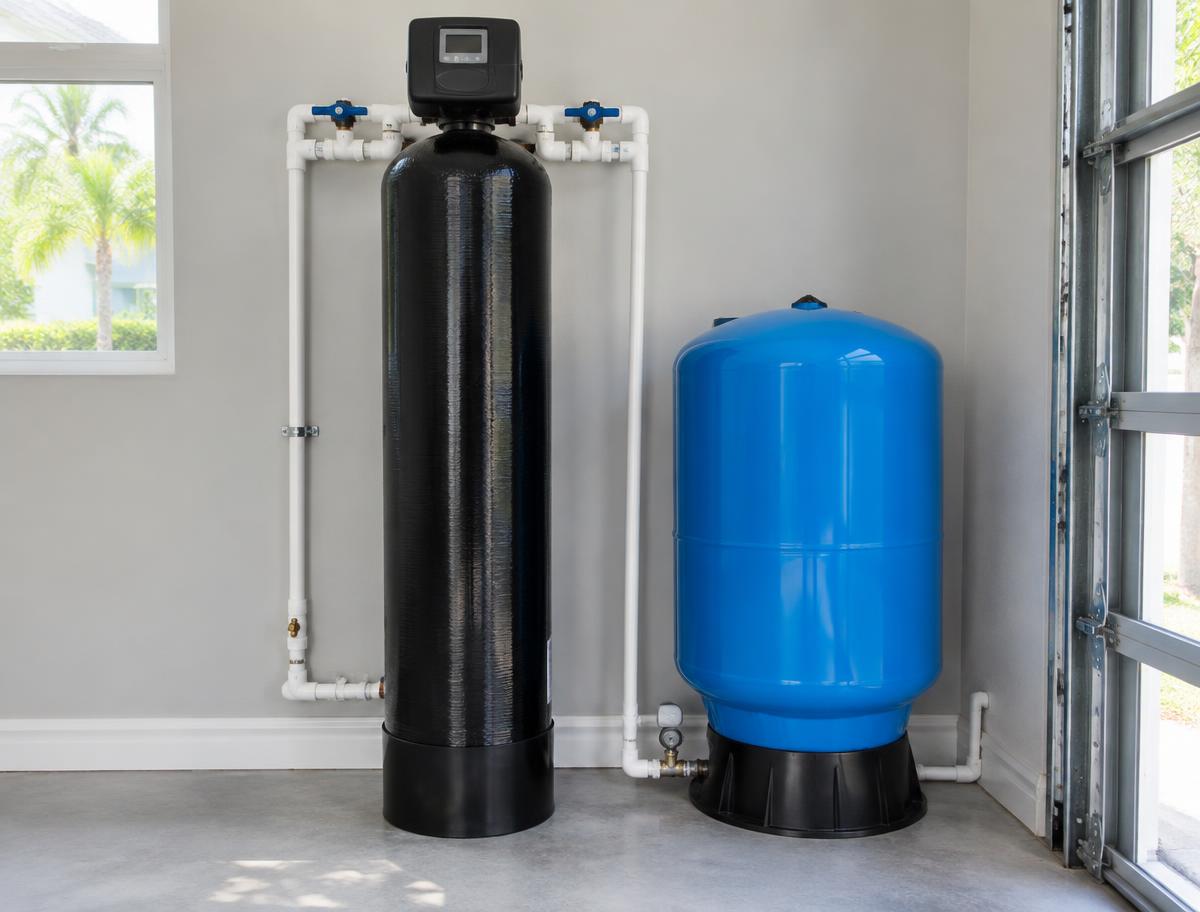
A dedicated filter tank targets the staining and rotten-egg odor common in Florida wells.
Installation & service
Work is planned around your property, plumbing layout and the equipment you choose.
Next step
The most important step with well water is understanding what you are treating. Request a free water consultation and we will review your well water concerns before recommending any equipment.
View Service AreasTell us about your water source and what you are noticing. We will explain the options that fit your property.