Temperature Testing
Temperature affects taste, chemical behavior and the interpretation of several other readings.
Know what is in your water
Clear testing. Understandable results. Treatment recommendations built around your property.
Freshwater Investment tests city and well water for a broad range of physical and chemical characteristics, then explains what the findings may mean for your home or business.
Testing scope and sampling needs are confirmed for each property.
Start with what you notice
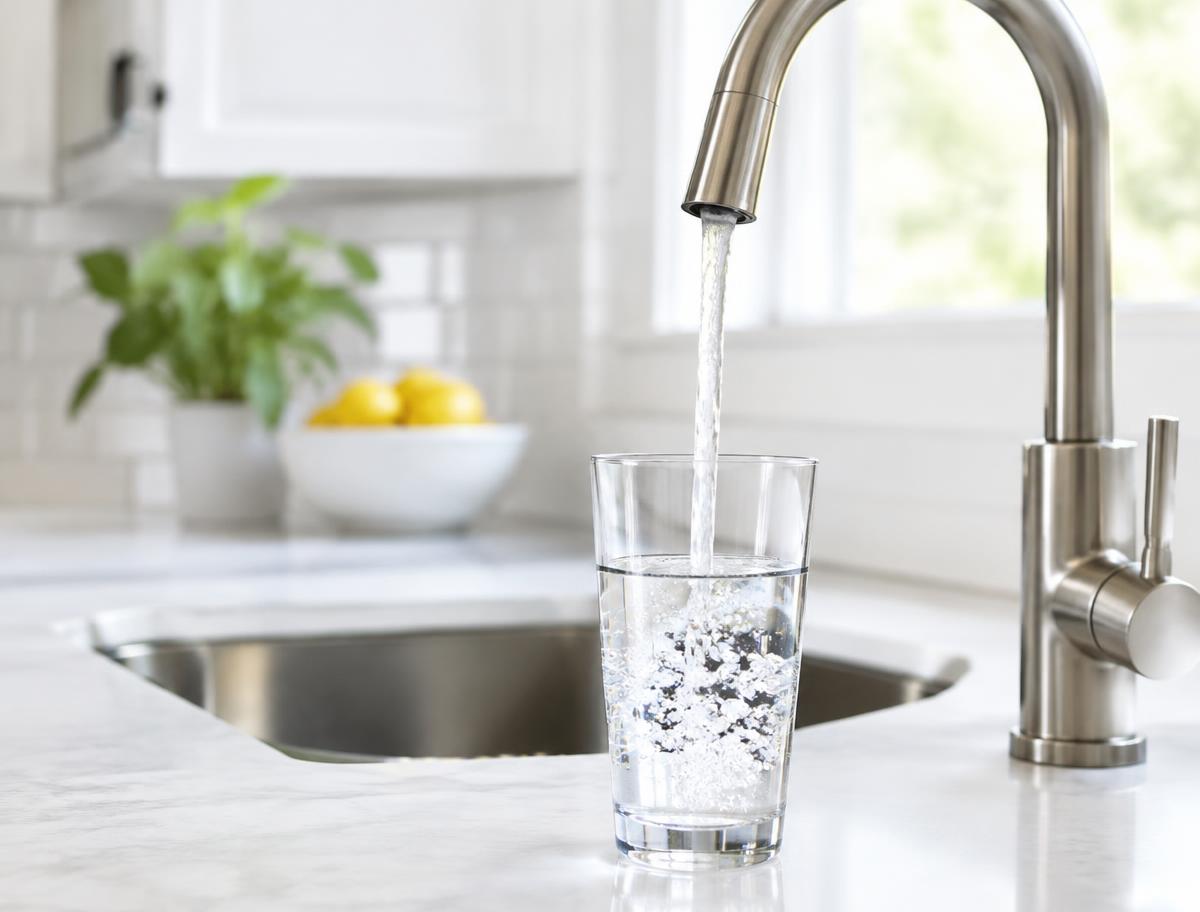
Water can look clear and still contain dissolved minerals or other substances. These everyday signs provide useful clues, but testing is the best way to understand the conditions at your property.
White crust, spotting, soap film or frequent scale around fixtures.
Explore treatmentA pool-like smell or taste that remains noticeable at the tap.
Explore treatmentA sulfur smell that may be present in cold water, hot water or both.
Explore treatmentOrange, rust-colored or brown marks on sinks, tubs, laundry or fixtures.
Explore treatmentVisible grit, cloudiness or particles in a glass, toilet tank or filter housing.
Explore treatmentMineral deposits on faucets, shower glass and inside water-using equipment.
Explore treatmentAn unpleasant taste that makes tap water less appealing to drink or cook with.
Explore treatmentA new color, odor, taste or staining pattern that should be investigated.
Explore treatmentOur testing capabilities
We begin with your water source, the concerns you have noticed and the conditions around the property. Freshwater Investment performs field measurements and coordinates the appropriate analysis for the tests your situation calls for.
A private well, municipal supply, visible staining and an unusual taste may each call for a different testing approach. We confirm sampling and test requirements before proceeding.
Temperature affects taste, chemical behavior and the interpretation of several other readings.
Shows how acidic or alkaline the water is and can help identify corrosion or treatment concerns.
Measures chloride, which can affect taste and may point to saltwater influence or other sources.
Estimates dissolved salts—especially relevant to some wells and properties near brackish influence.
Measures cloudiness caused by suspended particles such as silt, clay or other fine material.
Measures oxygen in the water, a factor that can influence corrosion, odor and water chemistry.
Screens for pesticide compounds where land use, runoff or well conditions make them a concern.
Measures nutrients that can enter water through fertilizers, septic systems and runoff.
Oxidation-reduction potential helps explain chemical conditions that affect iron, sulfur and treatment behavior.
Indicates how readily water conducts electricity and provides context about dissolved ions.
Checks for metals of concern based on the water source, plumbing and conditions at the property.
From numbers to next steps
Results build a profile of your water. Individual readings should be interpreted together, in the context of the water source and the concern being investigated.
Hardness, conductivity and related readings can show why scale, spotting or soap-film problems occur.
Chloride, turbidity, pH, iron and sulfur-related conditions can help explain what you see, smell or taste.
pH, dissolved oxygen and water chemistry can identify conditions associated with corrosion or mineral deposits.
Nutrients, pesticides, metals and other targeted analysis can reveal concerns that are not visible in a glass.
Useful for immediate physical and chemical readings and for identifying where more targeted testing may be helpful.
Selected tests focus on a known symptom, source condition or contaminant concern rather than testing everything by default.
A more comprehensive panel may be appropriate for private wells, property changes or concerns requiring precise laboratory methods.
Municipal water
Public water systems are regulated and routinely monitored. That does not mean every home receives water with the same taste, hardness or effect on plumbing.
Water can pick up characteristics as it travels through distribution lines and the plumbing inside a property. Disinfectant taste, hardness minerals, sediment from maintenance, and conditions in older plumbing may still matter to you.
Home treatment is not a replacement for public regulation. It is a way to address property-specific concerns such as scale, taste, odor, sediment or drinking-water preferences.
Visible household concerns
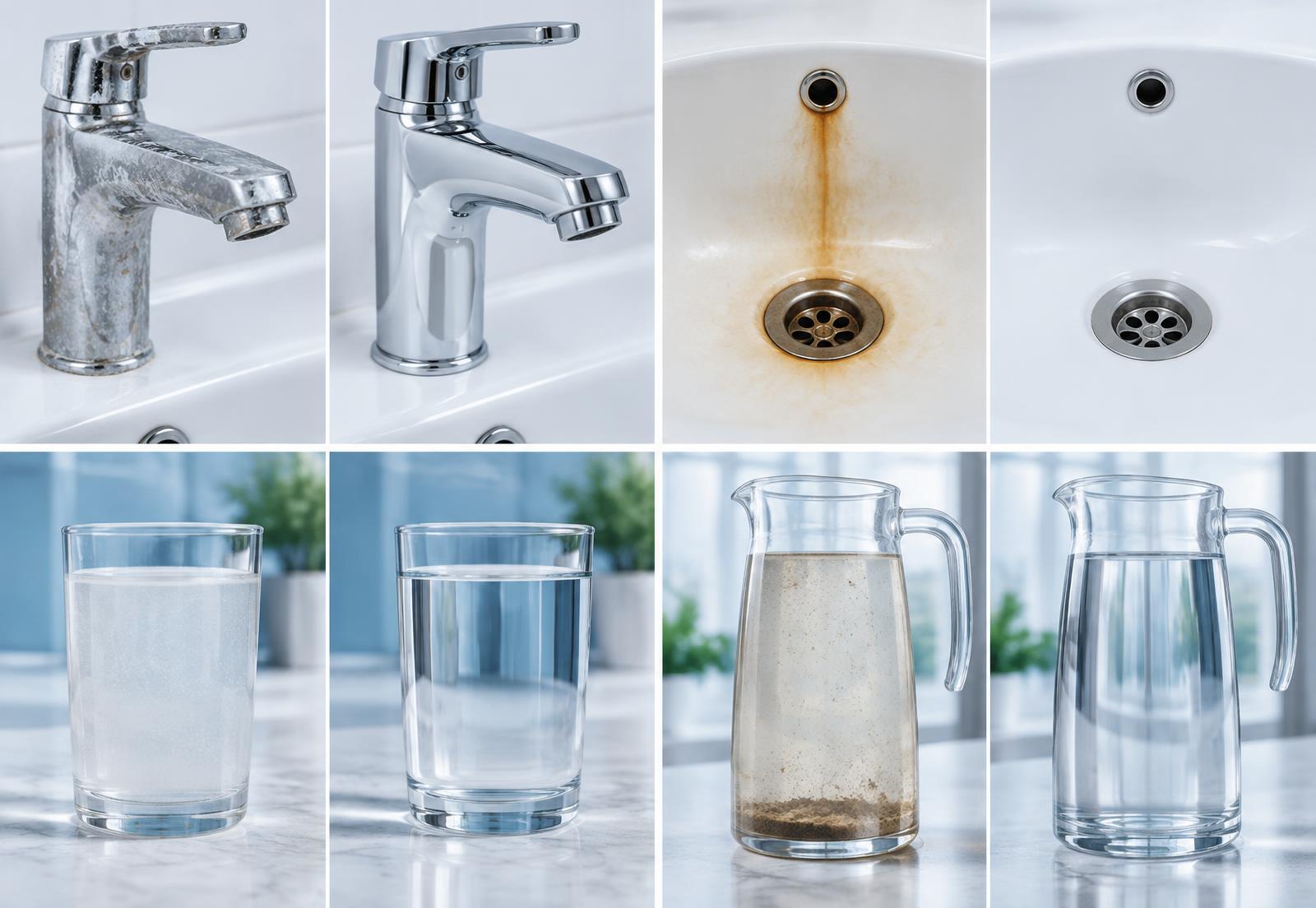
Testing helps match the concern to the right treatment. These educational examples show common visible differences—not promised outcomes.
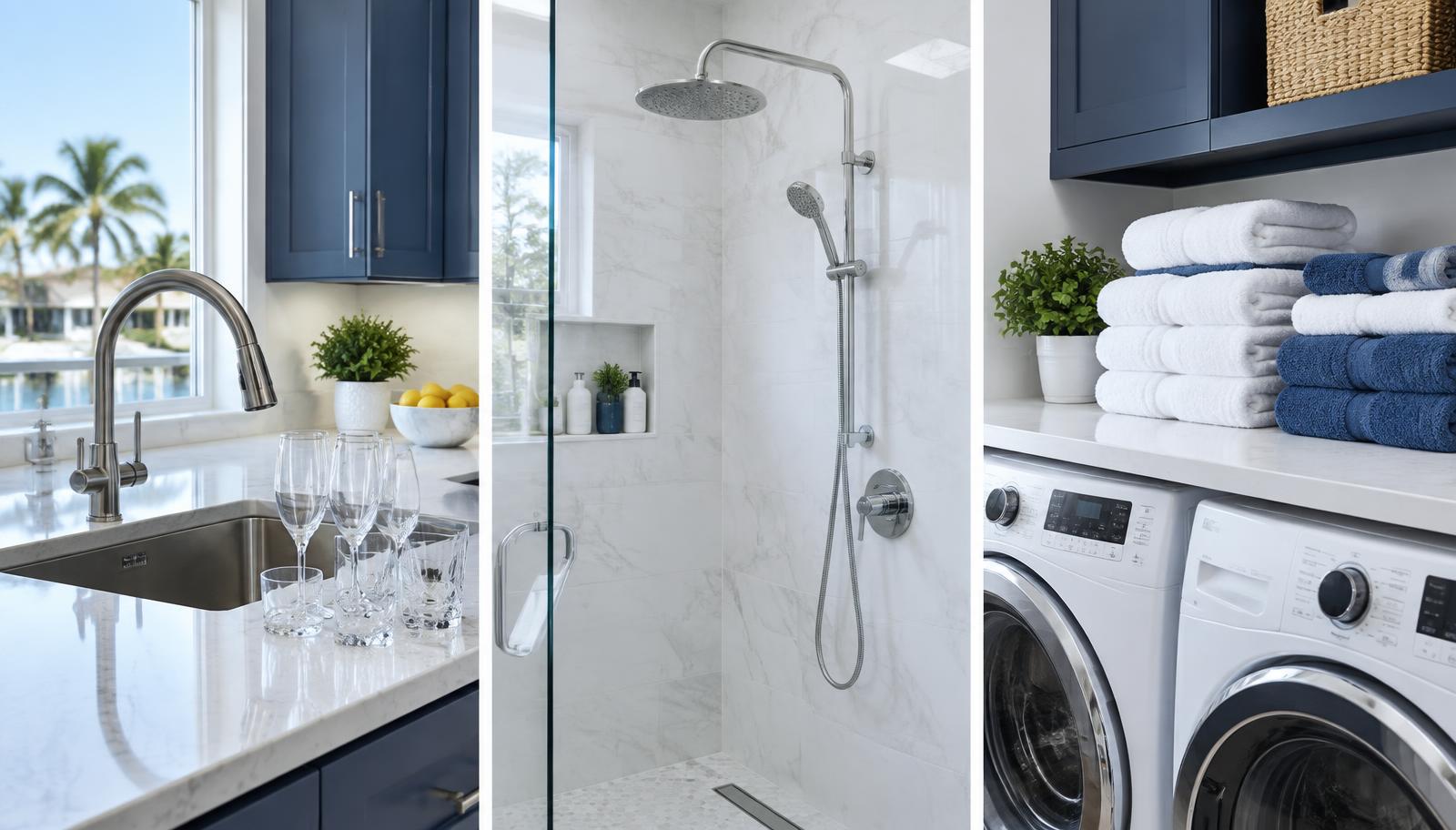
The importance of softening
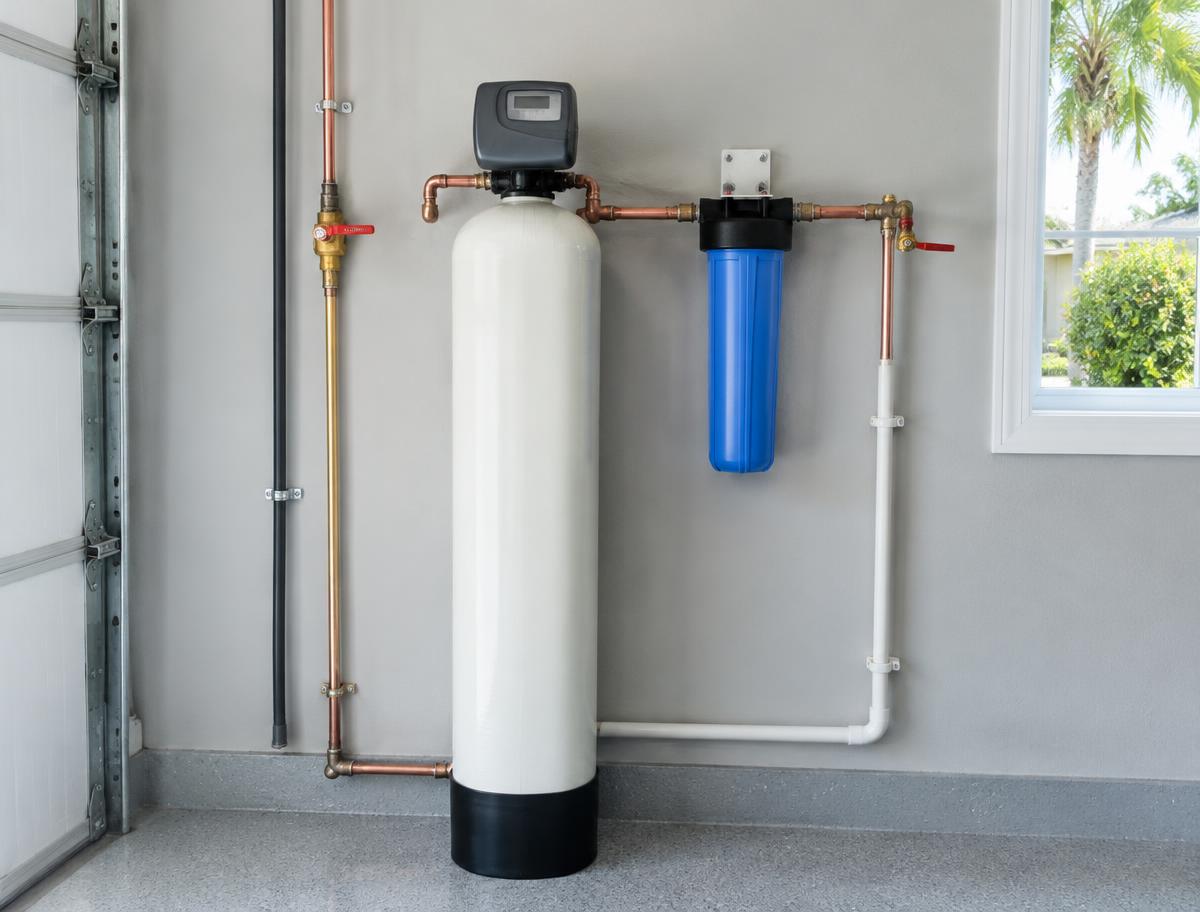
A water softener addresses calcium and magnesium hardness before water is distributed throughout the property. It does not remove every contaminant, which is why testing and correct system selection matter.
Less spotting on dishes and glassware, reduced scale around the faucet, and treatment options for better-tasting drinking and cooking water.
Reduced mineral film on shower glass, tile and fixtures, with soap and shampoo able to work more effectively.
Softened water can reduce mineral interference with detergents and limit hardness deposits in the washer.
Treating hardness at the point of entry helps reduce scale exposure throughout connected plumbing, fixtures and water-using appliances.
Water and your wellbeing
Water supports normal body-fluid balance, temperature regulation, digestion and kidney function. Water that tastes and smells acceptable may also be easier to make part of a consistent hydration routine.
The body needs water for normal fluid balance and many everyday functions. Individual needs vary with health, activity and climate.
Adequate hydration supports normal kidney function. People with kidney or heart conditions should follow guidance from their clinician.
Drinking water can replace higher-calorie beverages as part of a healthy routine, but it does not independently cause or maintain weight loss. Water treatment is not a treatment for cancer, kidney disease or any medical condition. If testing identifies a health-related contaminant concern, follow current public-health guidance and speak with an appropriate health professional.
General educational information only, not medical advice. For drinking-water standards and health guidance, consult the U.S. Environmental Protection Agency, Centers for Disease Control and Prevention, Florida Department of Health, and your healthcare professional.
Start with answers
Tell us whether you have city or well water and what you have noticed. We will discuss the right testing approach and explain the next step.